Recognizing and Respecting Sensory Needs in Daily Life
When you spend time supporting individuals with intellectual disabilities, you quickly learn that sensory needs are just as important as physical needs — and often, they’re misunderstood by the outside world.
Every person processes the world differently. For some, certain sounds, textures, or repetitive motions help regulate how they feel. For others, sensory overload can turn an ordinary outing into a stressful challenge. As a Direct Support Professional (DSP), part of my job is recognizing these needs and respecting them — at home, in public, and in every little moment in between.
What Sensory Needs Look Like
In my experience, sensory needs come in many forms. One of my clients absolutely loves louder music — the Disney station is our go-to on Apple Music, but other upbeat songs work too. That music brings comfort, focus, and fun all at once.
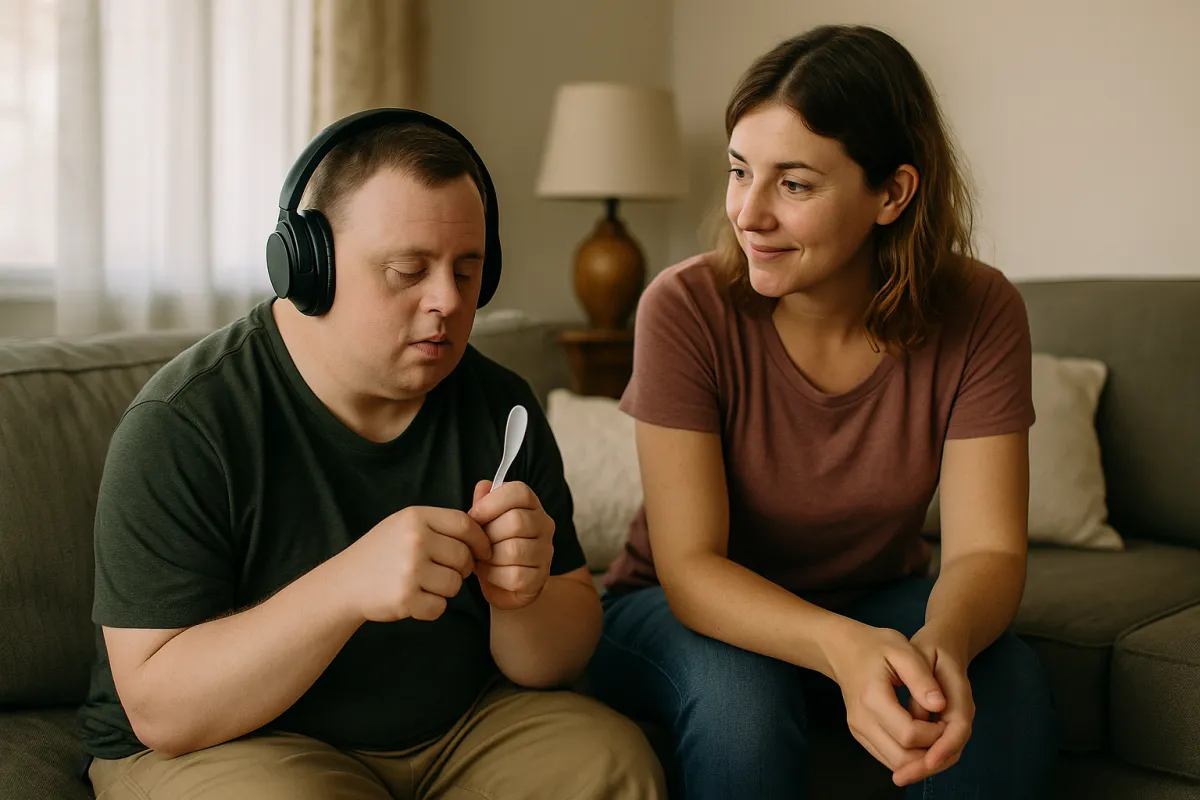
A client likes to spin in his chair when he’s relaxing at home — or play with a rolling fidget spinner when we’re out and about. Meanwhile, one of my other guys always wants to have zip ties, plastic spoons, or the pull straps on backpacks nearby. He even calls the zip ties his “whippies.” These simple, everyday objects are his tools for self-regulation. They help him feel secure and give him a way to manage what’s going on around him.
Meeting Sensory Needs in Daily Routines
Part of supporting someone well is planning ahead. I always make sure I have what my clients need: extra zip ties or spoons in my bag, a favorite fidget, or music ready to go at the press of a button. These might seem like small details — but they matter so much.
Meeting someone’s sensory needs isn’t just about avoiding stress. It’s about creating an environment where they feel seen, understood, and safe.
Handling Sensory Challenges in Public
Of course, things don’t always line up perfectly. One of my clients loves going to the movies — but his sensory needs don’t switch off just because we’re in a quiet theater. He’ll play with his backpack straps or have loud vocal stims when he’s excited or regulating.
Before the movie starts, I simply explain to nearby people that he may vocalize during the film and why. I’ve never had anyone complain or ask us to leave — once people understand, they’re almost always kind and accepting. A little communication upfront can turn confusion or judgment into patience and support.
Knowing When It’s Too Much
Over time, you learn the signs that someone is starting to get overwhelmed. For my clients, it often starts with certain vocal stims that tell me they’re reaching their limit. When I hear those, I don’t ignore them — I respond.
I might ask what’s wrong, even if they can’t answer in words. Or I’ll offer choices: “Do you want to sit down? Do you want a spoon? Should we step outside for a few minutes?” Sometimes, just giving them a familiar fidget — like a plastic spoon — helps them calm down and refocus.
What I Wish More People Knew
I wish more people understood that many “behaviors” are not what they think they are. They’re not outbursts for the sake of misbehaving — they’re ways of coping with a world that can be overwhelming. Playing with a spoon, spinning in a chair, vocal stims — these are de-escalation tools.
Unfortunately, so many people make assumptions based on stereotypes or what they’ve seen in the media. Unless they have a family member with an intellectual disability, they may never have learned how diverse and important sensory needs can be. That’s why every calm explanation I give — in a movie theater, at the park, or in line at the store — is a tiny piece of education. It’s not perfect, but it’s a step.
Why It Matters
Respecting someone’s sensory needs isn’t complicated. It’s about listening, planning ahead, and never assuming that what works for you will work for them. It’s about giving them what they need to feel safe, comfortable, and in control of their own experience.
And it’s about reminding the rest of the world that this isn’t about “fixing” people to fit our expectations — it’s about meeting them where they are.
